
Repertoire
What We Do

-
A La Fosse is a collage of short dances choreographed by the dancers of Nannette Brodie Dance Theatre. This work is inspired and pays tribute to the choreography of Bob Fosse. It shows the range of the company members’ abilities in jazz and musical theatre genre. Many of the dancers studied with Amanda Turner, Ann Reinking and Chet Walker of the Fosse tradition. It is a dance both provocative and entertaining.

-
Almost a Waltz is carefree with a splash of shades of pink and gray with a playful quality of intricate footwork. It is based on the delicate sounds of gypsy jazz artist, Raul Reynoso.

-
Body of Water is a two-part dance theatre work that was in development for two years. It began with a study of water and its many states evolving into an expression of the abstract qualities of water, a kind of landscape in water. It explores the tranquility as well as the destructive nature of water conjuring images of drowning, hurricanes, and shipwrecks. Collaborating on this project were composers, Shane Cadman & Michael Gordon, set designer, Seth Arreola, and lighting designer Jody Caley.

-
This choreography was developed upon the themes of the victims of disasters from water beginning with Hurricane Katrina and the subsequent major storms and flooding around the world. It utilizes wooden props that roll on the stage like rafts of doors and gates. In addition there is the top of a house that can spin with dancers attached. The Aftermath piece creates a chaos on the stage consuming the dancers and the viewer.

-
Drift is an intriguing solo that folds and unfolds like the tissue of an Origami crane. It tumbles, rolls, and scatters in the wind or floats down a stream. The music is haunting in continuum by Michael Gordon.

-
El Mundo de las Mujeres was choreographed in 2006 by company member, Jennie Sustaita. This is a powerful rhythmic piece influenced by Latin instrumentation. The dance celebrates the beauty and strength of women within the Latin culture. The music is by Clive Romney written for his band, Enoch Train. The dance is part of NBDT’s HEARTLAND Project.

-
Émigré debuted at the Int’l Comp. for Contemporary Dance in Mexico City, in 1999. After interviewing many refugees in Nannette’s community, discussing their personal stories and observing daily media coverage of the plight of the émigré, a dance piece began to evolve. The music is a collage of international artists arranged by Ms. Brodie and Evan Williams. The costumes were designed by Joel Berlin. This work was funded in part by the California Council for the Humanities.

-
This work was developed over a two year period with funding from the California Arts Council’s Veteran’s Initiative Program. It involved interviewing and working with veterans at the VA in Long Beach. Their stories were then woven into a choreographic language to tell the journey that our military men and women travel from their oath, to training, deployment, conflict and reflection after their military duty.

-
Artistic director, Nannette Brodie has collaborated with Enoch Train, an American folk music ensemble to create a performance that transports the audience around the world. Stories, struggles and triumphs are portrayed through an evening of live music, modern dance video sequences and spoken word. There are 7 dances included in Heartland as follows: The Welcoming, Ever Near at Hand, Beyond the River, Faith, Hope and Love, Distant Promises, El Mundo de las Mujeres and Depart and Remember.

-
Holiday brings out the playfulness in all as it winds its way on an imaginary tour or vacation for a young couple. The dance was created in 1978 by Nannette Brodie and Danial Shapiro, when they were both dancing for the Moving Company. The piece was revived with NBDT in 2008 accompanied by a new musical score created by Eric Ruskin.

-
Islands of the Blessed was created by Nannette for the company in 1986 and was returned to the current repertoire last season. This dance has a surreal, other-worldly quality about it inspired by various images from Greek mythology without actually telling a story thereof. The dancers do not seem to be part of this world as they glide across the floor and are lifted into the air. The music of Phillip Glass is hypnotic and draws the listener in like the sirens of the Odyssey.

-
Journey of Change explores the dynamics of a relationship of two men and one woman from tenderness to opposition, and resolve. The piece, choreographed by NBDT company member Erica Villalpando, was first performed in 2008 for the Invitational Concert at Golden West College Theater.

-
Jubilee is originally part of the Smithsonian Week project created with Ricky Peyton, specialist in Gospel and Rhythm and Blues music for the Smithsonian Institute. The dance movement was created by Amanda Turner and adapted later to Gospel music by Nannette Brodie. It is a joyous dance that celebrates the free spirit.
-
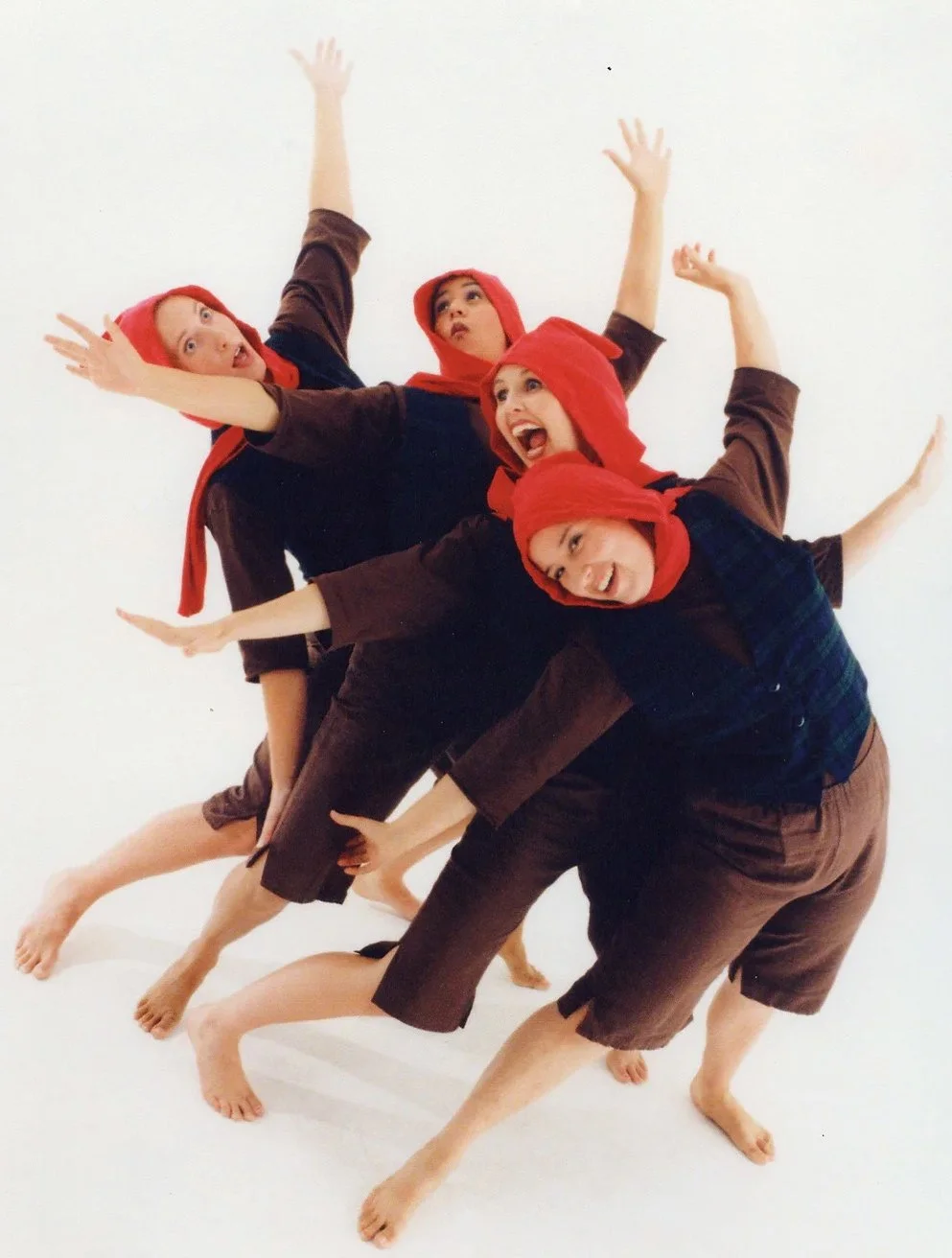
Legend of the Wee People transports the audience into the mythical days of Ireland with imagery of goddesses, elves and fairies that tell a story about the brilliant ball of light that is treasured by the wee people. This dance is part of the program, All Things Irish, a performance for families and includes live fiddling music.

-
Let Them Eat Cake was created as a celebration for NBDT’s 25th Anniversary as a collaborative among the director and company. It contrasts the opulent feel of the Baroque period in costume and mannerisms with playful contemporary movement and the music of Takenobu.

-
This is a work inspired by the master of Jazz, Miles Davis. It delves into his 1950’s period with an upbeat ensemble piece, a sultry quartet, and closing with a romantic duet. It continues to develop over the years with new Miles’ pieces choreographed and woven into this tapestry of jazz.

-
Mobile began as a tribute to Alwin Nikolais with his invention in costume and unusual props. The original music is by Craig Kupka with additional percussion by Bill Georges. The dance is other-worldly and charming in a fantasy landscape of dots and lines.
-
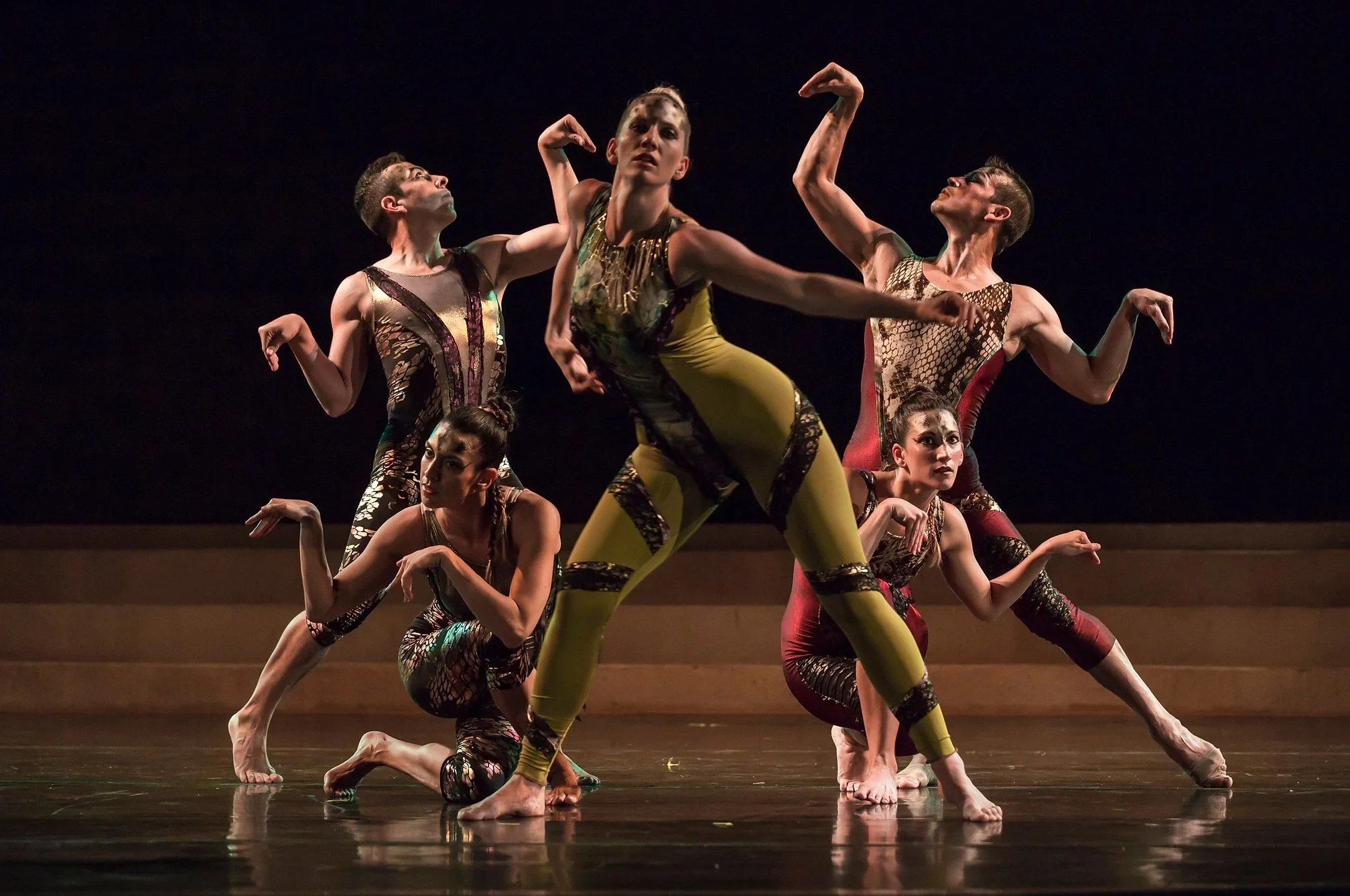
Company member Javier Gonzalez, Stephanie Maxim and director Nannette Brodie created Night Blooms. The imagery is derived from the insects and flowers that are seen in the evening. Costuming by Elias Roldan glows in patterns like the designs of insects and exhibits their disjointed movement. There is an allure and scent of the summer air within the dance plus the fury of our insect world. It works well in both outdoor and indoor venues.

-
Polymorphic was inspired by shape and line of architecture with the use of the red boxes as props contrasted by the East Indian inspired music which invokes lines of yoga body forms. It moves from a slow meditative scene to a high energy acrobatic motion on and off the boxes. The music is by Sheila Chandra, Salon Oriental, and Little Buddha Cafe.

-
Seen and Unseen is a trio for three men as they struggle in an unrelenting design of darkness and light. It becomes a kind of game as the light attempts to control the dancers. The piece was choreographed by Nannette Brodie and presented in 2008 for the Invitational Concert at Golden West College Theater.

-
Seen from Beneath is an exploration of light and psychological pathos. It was created for Jennie Sustaita and performed in July 2007 for the Dance in the Desert Festival in Las Vegas. The music and movement for the work are mysterious and provoke the audience to wonder in anticipation as to what is coming next.
-
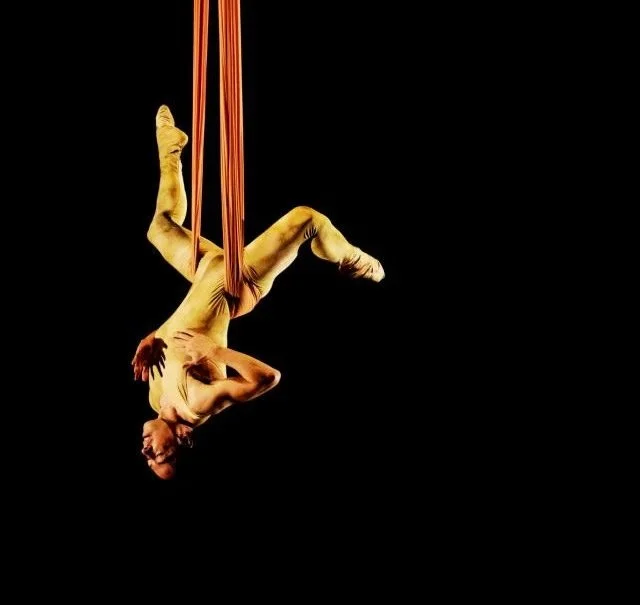
Seen from Within is a solo work that begins with the living form suspended within the confines of a hammock. It evolves into a quiet struggle between the aerial body and the pull of gravity below, creating a dialogue between weightlessness and grounding. The character’s affinity for both spaces leaves them suspended between worlds — never fully anchored, yet never entirely free. Set to music by Philip Glass, this piece is part of the larger suite Dark to Light.
-
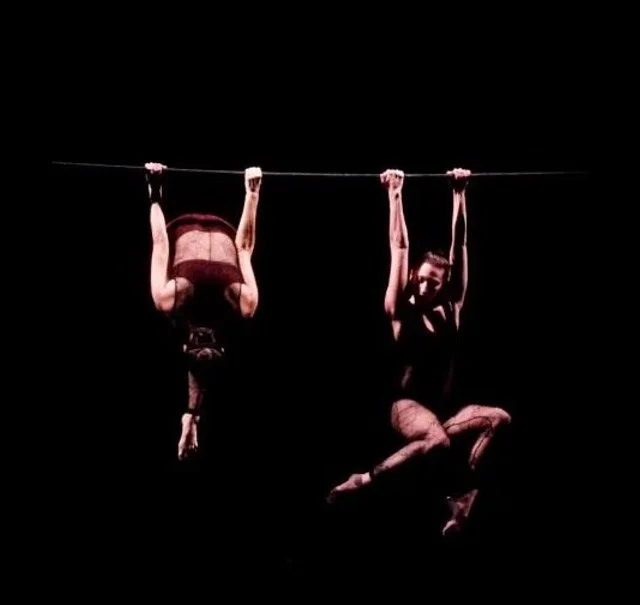
Seeing Through invites the audience into a layered, almost voyeuristic experience — observing beauty and connection from a distance. The work features two women suspended on an aerial bar, intertwined in sculptural forms that shift between strength and vulnerability. Their movement unfolds both in the air and from the ground, blurring the line between what is revealed and what remains just out of reach. Framed as if viewed through a window, the piece becomes both intimate and elusive. Set to music by Kerry Muzzey, this work is part of the larger suite Dark to Light.
-
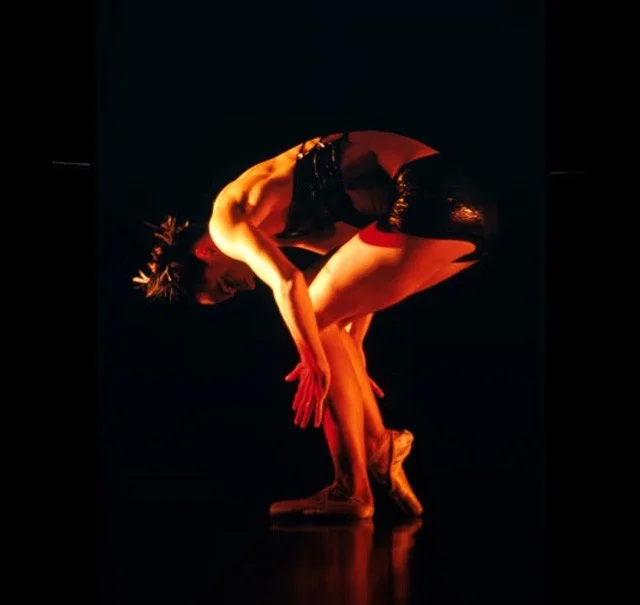
Seizing the Light is a striking solo work on pointe, exploring transformation through a creature-like presence that evolves before the audience’s eyes. From the first moment on stage, the dancer embodies both tension and control, navigating a physical language that is at once grounded and otherworldly. The choreography, created by Nannette and Allison Risdon, is driven by a powerful, rhythmic score that amplifies the intensity of the performance. With music by Daniel Lenz and Paul Sebastian, the piece carries a raw, driving energy throughout. This solo was awarded the Else Loudon Solo Award for Choreography at the McCallum Theatre Dance Festival in Palm Desert.
-
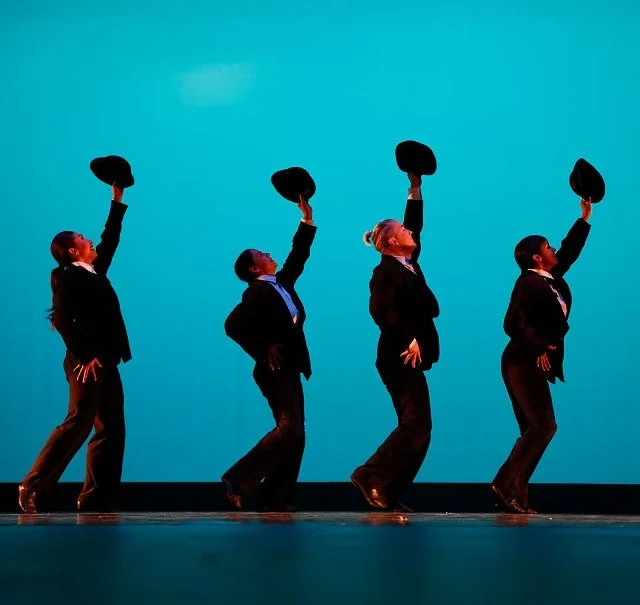
Steam Heat is inspired by the original choreography of Bob Fosse, arranged by Jeff Hendrix. This sharp, stylized work is performed in classic black suits, bow ties, and derby hats, capturing the unmistakable precision and nuance of Fosse’s signature movement. The choreography emphasizes clean lines, subtle detail, and rhythmic control, bringing a playful yet refined energy to the stage. Set to music from the film Pajama Game, composed by Richard Adler and Jerry Ross, the piece pays homage while remaining fresh and engaging.
-
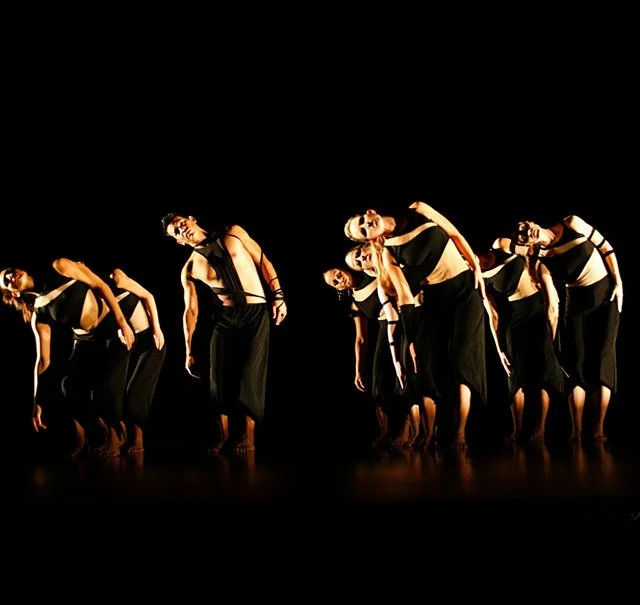
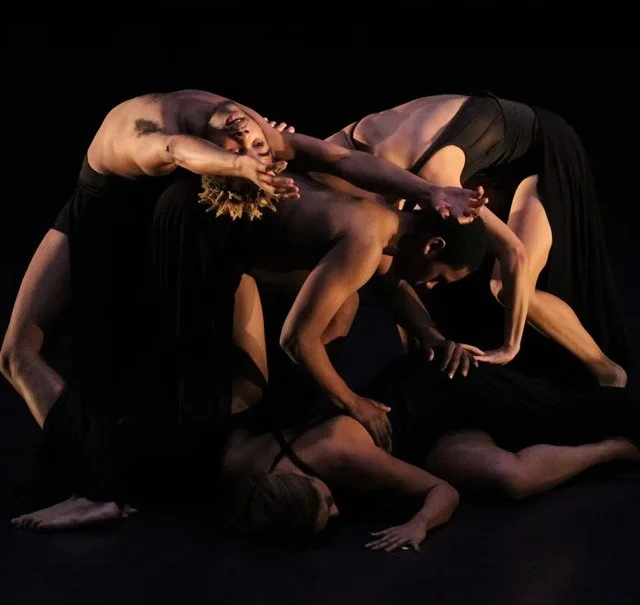
Somewhere in Between emerged through a collaborative process, drawing from movement motifs and phrases developed by the company’s dancers. The choreography blends fluidity with precision, set against the electronic soundscape of Orbital. Movement unfolds in layered textures — from subtle isolations to bold, commanding phrases — creating a dynamic contrast between control and release. The work exists in a space of tension and transition, where opposing energies meet and evolve.
-
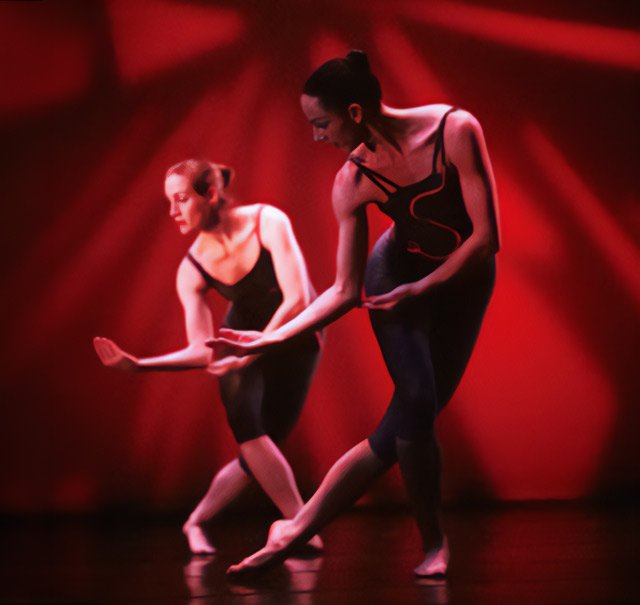
Strength in Sorrow is a deeply emotional work that explores the journey of personal loss. Choreographed by Stephanie Maxim, the piece traces the evolving stages of grief — from shock and disbelief to anger, reflection, and ultimately acceptance. Through interconnected movement and raw physical expression, the dancers embody the shifting dynamics of a family navigating loss together. The work unfolds with honesty and restraint, revealing both the fragility and resilience found within shared human experience.
-
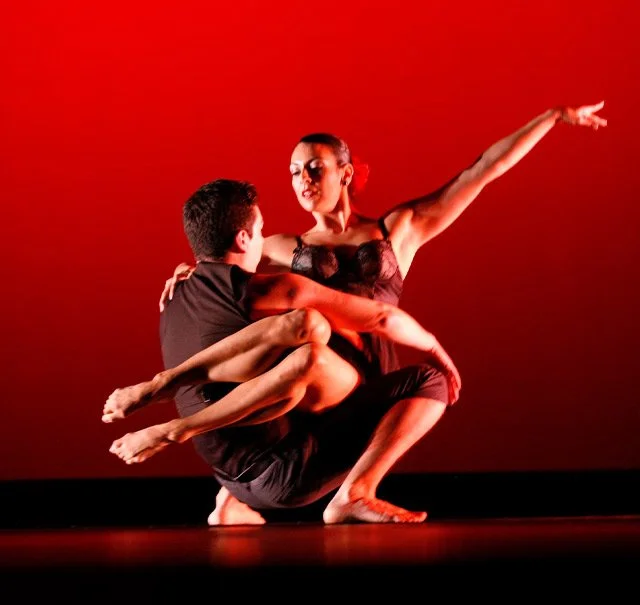
Sygnex draws inspiration from the unique qualities of human handwriting — particularly the individuality of a signature. Composed of six interconnected solos, the work weaves together movement that is both intricate and expansive, echoing the fine detail and expressive flow of written form. Each dancer embodies a distinct physical “signature,” revealing personality through nuance, rhythm, and intention. The title reflects both the mark of identity and the universal symbol of those whose voices go unseen. Set to music by Eric Ruskin, the piece explores expression as both personal and collective.
-
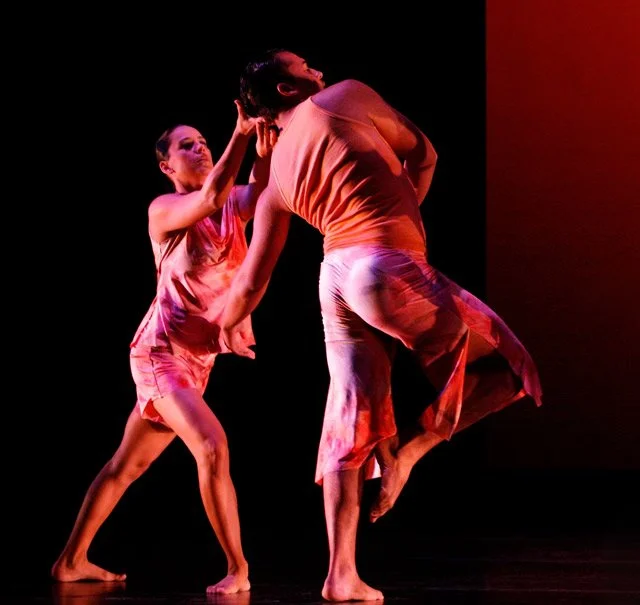
Tango Point is a sensual and evocative work that draws from the intensity and passion of tango. Choreographed by Kelly Roth for NBDT, the piece is set to the music of Astor Piazzolla and Thomas Oboe Lee, blending classical and contemporary influences. The choreography explores themes of connection, tension, and vulnerability, weaving intimate partnering with moments of striking physical control. Set within a dimly lit, atmospheric world, the piece captures a fleeting sense of innocence intertwined with desire and emotional depth.
-
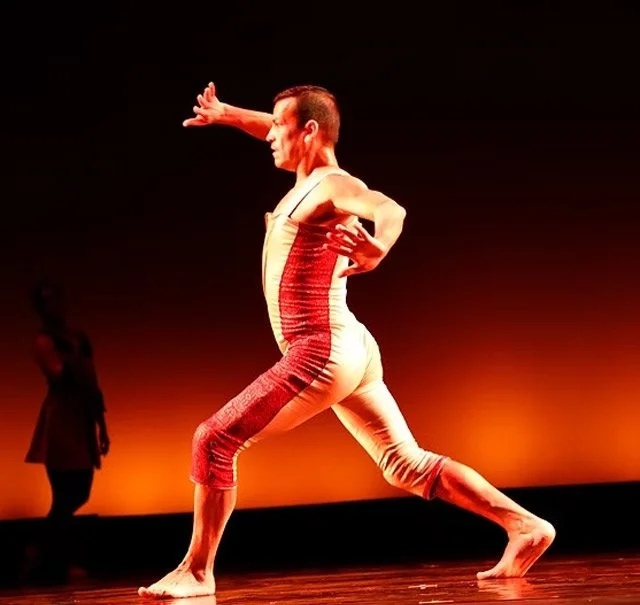
There and Back is a dynamic work that captures the restless energy of movement and return. Originally created for NBDT in 2009 by Peter Kalivas of the PGK Project in San Diego, the piece evokes the image of a tumbleweed carried across an open landscape — shifting, circling, and never quite settling. The choreography blends fluid transitions with bursts of momentum, creating a sense of constant motion and transformation. Set to music by Moby, the work unfolds in warm, atmospheric tones, reflecting both journey and repetition.
-
Vientos de Andalucía carries the audience on a slow, immersive journey, like a warm wind traveling from Morocco across the sea to Spain. The choreography evokes a rich tapestry of emotion — from struggle and devotion to moments of surrender and rising passion. Influenced by the rhythms and spirit of flamenco, the movement unfolds with intensity and grounded strength, echoing the cultural currents that shape its path. Set to music by Adam Hurst and Caravan Rhythms, the piece blends atmosphere and storytelling into a deeply evocative experience.